
DNA Test for Li-Fraumeni Syndrome
Li-Fraumeni Syndrome (LFS) is a hereditary genetic disorder characterized by mutations in the TP53 gene. It is inherited in an autosomal dominant manner.
People with this syndrome have a sharply increased risk of developing various types of cancer before the age of 30. While the risk of cancer in individuals under 30 with a normal TP53 gene is about 1%, for those with Li-Fraumeni Syndrome, the risk rises to 50%.
Statistics show that within 30 years of diagnosis, 57% of patients develop malignant tumors. Any organ can be affected by oncogenesis. With proper prevention and treatment, cancer development can be prevented.
Order a mobile service visit to your home or office.
Same-day service is available.
For a free consultation, please call:
+7 (499) 490-28-01Symptoms may vary depending on the type of primary malignant tumor caused by Li-Fraumeni Syndrome—that is, depending on the organ affected by cancer. Therefore, only a DNA test can accurately diagnose the presence of a congenital or acquired pathology.
The main symptom is the development of cancer at a young age, typically before 30 years old.

The studied genes
This test panel includes the detection of all pathological forms of the TP53 gene. TP53 is one of the main tumor suppressor genes. It prevents the formation of cancer cells in the body.
The gene encodes the tumor suppressor protein p53, which participates in critically important processes:
- Cell cycle control — overseeing the entire lifespan of a cell from its formation to death;
- Apoptosis — programmed cell death aimed at preventing inflammatory reactions and clearing defective cells from the body;
- DNA repair — the process of fixing damaged DNA regions, preventing accumulation of errors that lead to gene mutations;
- Angiogenesis — reorganization of the primary capillary network; during oncological diseases, angiogenesis becomes intense and uncontrolled, leading to rapid tumor growth and metastasis spread.
Thus, the TP53 gene plays a key role in DNA control and maintaining genome stability. Mutated forms of TP53 result in abnormal p53 proteins and rapid proliferation of malignant tumor tissue.
This pathology can arise during early stages of embryogenesis, spermatogenesis, and oogenesis. However, more than 80% of Li-Fraumeni Syndrome cases are hereditary. There are specific criteria recommending genetic testing:
- Development of sarcoma, osteosarcoma, CNS tumors, breast cancer, or adrenal cancer before the age of 46, or their occurrence in close relatives;
- Occurrence of multiple tumors, two of which are associated with this syndrome, with the first tumor diagnosed before age 46;
- Breast cancer diagnosed before the age of 36.
If this genetic disorder has been diagnosed in your family, it is urgent to undergo DNA testing.
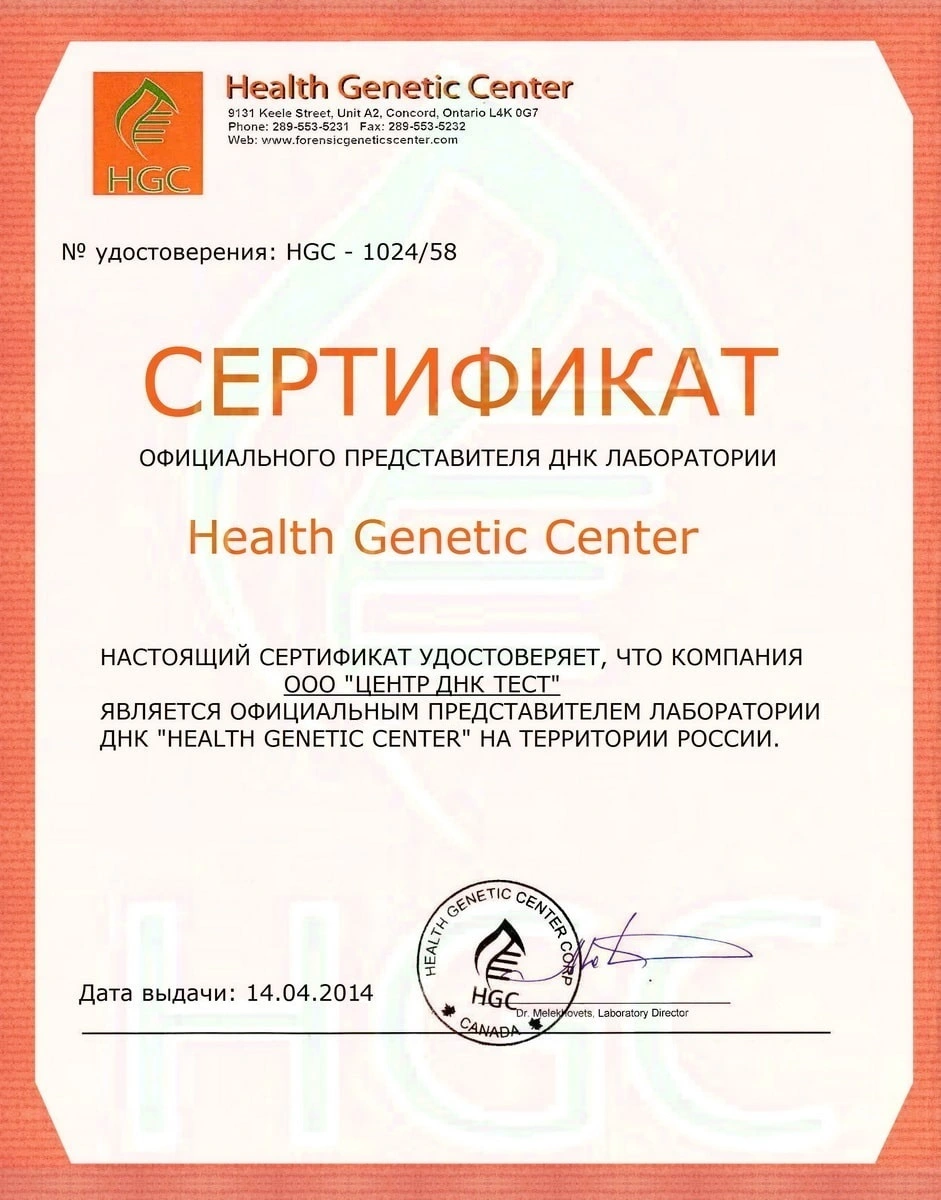
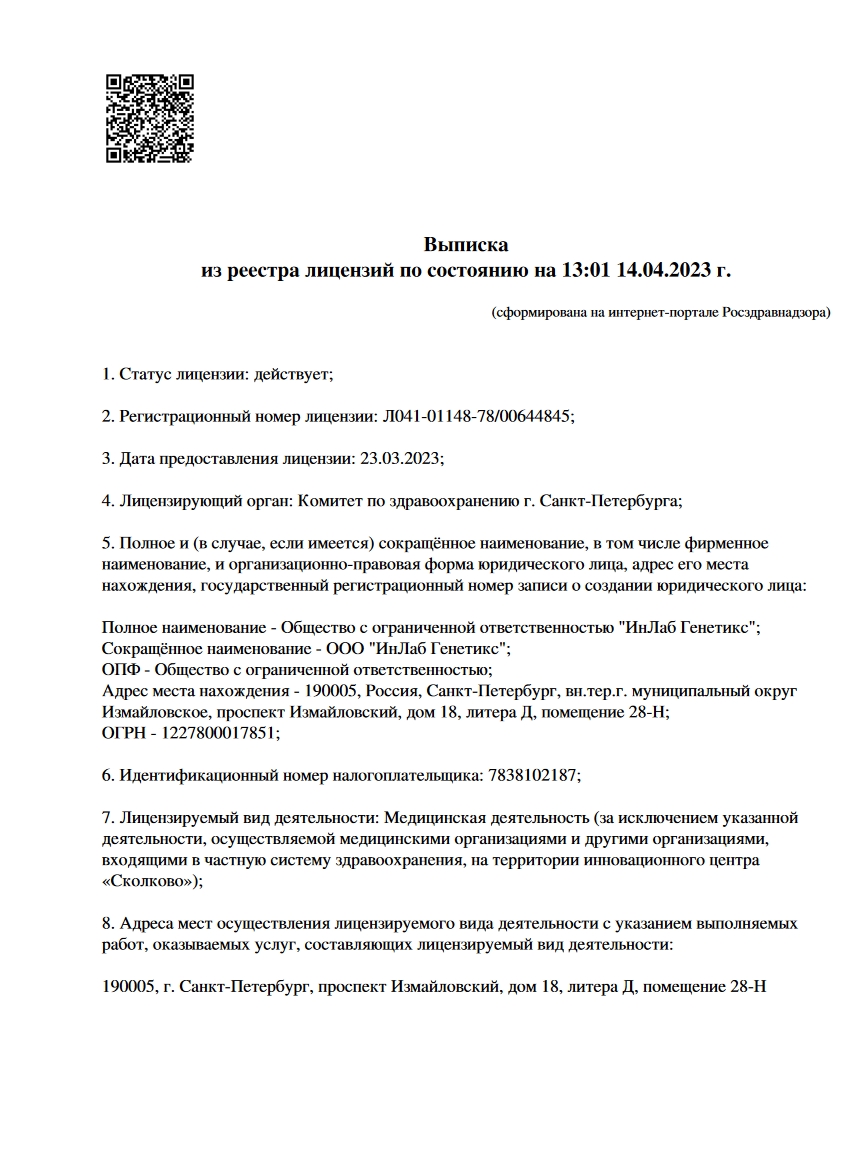
DNA Laboratory licenses and certificates
How to Take a DNA Test for Li-Fraumeni Syndrome?
Genetic analysis uses samples of buccal epithelium (mouth swab) or venous blood in the amount of 5-10 ml.
Venous Blood
A vacuum tube with a purple cap is required to collect blood. The tube must contain Ethylenediaminetetraacetic acid (EDTA) of type K1, K2, or K3. Blood volume should be from 2 ml to 6 ml. The use of two tubes is allowed.
The collection is performed with the patient in a sitting position. Blood flow should go directly into the tube. After the procedure, shake the tube 5-6 times to mix the blood with EDTA.
Buccal Epithelium
To provide a buccal epithelial sample, you can visit specialists at a biomaterial collection point or collect the sample yourself at home. For this, you will need:
- a cotton swab — at least 2 pieces, preferably 4;
- a clean paper envelope — 1 piece;
- a pair of sterile disposable gloves — 1 pair.
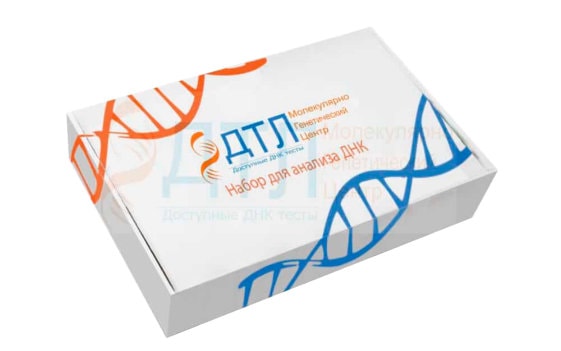
Or you can order a free kit by phone from our DNA center, which already contains everything you need.
See detailed instructions with a video: How to take a sample.
How long does it take?

The turnaround time for the analysis is 5 business days from the moment the samples arrive at the laboratory.
The day of sample delivery is not counted, as all samples first go through a registration process before being forwarded to the genetic specialists.
How to Receive the Report
You can receive your DNA test results in any convenient way:
- Electronically via email;
- In person at the biological sample collection point;
- By delivery through Russian Post;
- By courier delivery to your door;
- By phone (if you have a unique order number, and the phone number is authorized to receive verbal results).
The method of result delivery is selected when placing the order for the analysis.

Where to get a DNA test for Lee-Fraumeni Syndrome
Take a DNA test for Lee-Fraumeni Syndrome
- You can use the form «Pre-appointment» to schedule an appointment or come to our genetic center at any time convenient for you.
See step-by-step instructions see here. - Do it yourself at home:
- Order by courier our branded kit, specially designed for self-collection of DNA samples.
- Using ordinary cotton swabs (ear swabs) from a pharmacy. Our instructions.
- Order a specialist visit to your home for free.
Why the DNA Center «DTL» is the Best in Moscow


How to pay for a DNA test for Lee-Fraumeni Syndrome
For your convenience, there are several cash and non-cash payment options for a DNA test:
- In our DNA centers, you can pay in cash or with a bank card.
- Online payment is available on our DNA center website.
- At the offices of Sberbank or any other Bank by receipt (download).
- Through a bank account (for legal entities).
When filling out an application for DNA analysis, you can choose the method of receiving the genetic test results:
- In person at the DNA center.
- To the e-mail specified in the application for analysis.
- By courier service throughout Russia.
- If you have taken a legal DNA test, we can send the forensic genetic report to the address of the court.
- If you need another delivery method, you can specify it in the application.
Each order is assigned a unique individual number. The laboratory guarantees 100% safety and confidentiality of all data received from you.
What should I do if the test is positive?
A positive test result indicates the presence of a pathological gene variant that increases the risk of developing a malignant tumor. This should not be viewed as a sentence. A DNA test is conducted to provide early awareness of potential cancer development.
However, there is a possibility that cancer has already begun to form. In such cases, DNA testing serves as one of the diagnostic tools at the earliest stages of the disease.
If the result is positive, it is important to:
- Consult an oncologist with your DNA test results;
- Undergo additional diagnostic procedures: X-ray imaging, cytological examinations, laparoscopy and thoracoscopy, biopsy of tumor tissue.
These investigations will help the oncologist accurately determine the stage of cancer and whether metastases are present. By combining this information with family history and DNA analysis results, appropriate treatment can be prescribed.
A comprehensive approach is typically used, combining surgery with chemotherapy or radiation therapy. The treatment plan and type of therapy are determined solely by the attending physician.
Reviews of DNA Tests and Laboratories in Moscow
























The «DTL» DNA Center conducts DNA testing throughout the entire Russian Federation. The laboratory uses equipment from Applied Biosystems, a global leader in biotechnology. Modern scientific and technological advancements enable us to perform unique DNA tests that are offered by only a few laboratories worldwide. All tests are carried out exclusively by certified specialists, including world-class experts with over 15 years of experience in DNA research.
The «DTL» DNA Center has offices in many cities across Russia, making it possible to submit samples in virtually any city, including smaller towns across the country.