
DNA Test for Genetic Predisposition to Male Infertility
This study is aimed at identifying genetic causes of male infertility (MI), which may result from impaired spermatogenesis. Due to mutations in certain genes, the number of active spermatozoa can decrease, and their quality can deteriorate.
Genetic factors play an important role in the development of azoospermia in 10-15% of cases and severe oligospermia in 5-10% of cases of male infertility.
Order a mobile service visit to your home or office.
Same-day service is available.
For a free consultation, please call:
+7 (499) 490-28-01Genetic male infertility often has no obvious symptoms, making diagnosis extremely challenging. Usually, suspicion of gene abnormalities arises only after medical tests fail to provide clear results.
However, there are some symptoms that may indicate genetic mutations leading to male infertility:
- Reduced erectile function;
- Hormonal imbalance;
- Vitamin D deficiency;
- Underdeveloped testes;
- Cloudy urine after sexual intercourse.
Structural and numerical chromosomal abnormalities causing male infertility may also result in conceiving a child with chromosomal disorders. Doctors recommend that men undergo a DNA test for male infertility if:
- They have fathered a child with Down syndrome or other trisomies and monosomies;
- They have fathered a child with deletion syndromes, especially involving structural abnormalities of the Y chromosome in boys;
- Chromosomal abnormalities are found in the karyotype of aborted tissue in cases of missed miscarriage or spontaneous abortion.
Genetic male infertility does not always lead to complete infertility. The condition may cause the formation of sperm with chromosomal abnormalities, which can result in a fetus with developmental disorders.

The studied genes
The test panel includes key genes affecting spermatogenesis processes:
- AZF locus on the Y chromosome. The main marker influencing normal sperm production. The AZF locus is divided into three regions: AZFa, AZFb, and AZFc. The severity of male infertility is diagnosed depending on the size and type of deletion in these regions.
Complete deletion of the AZF locus or regions AZFa and AZFb results in the inability to produce healthy sperm, diagnosed as complete infertility.
Deletions of AZFb and AZFc loci lead to azoospermia.
With a complete deletion of the AZFc region, there is a 60% chance of retrieving sperm for assisted reproduction.
Partial deletion of the AZFa region results in less than 10% chance of normal sperm production.
Partial loss of AZFb region gives about 50% chance for healthy spermatogenesis.
Partial deletion of AZFc allows conception with adherence to diet and medical recommendations.
- CFTR gene — encodes the cystic fibrosis transmembrane conductance regulator (CFTR) protein. It regulates the transport of sodium and chloride ions across the cell membrane. Mutations in CFTR lead to production of thick mucus that blocks the vas deferens, preventing sperm from entering the semen.
If a male carries a CFTR mutation, it is strongly recommended that the female partner undergo a DNA test for CFTR carrier status. If the child inherits mutant genes from both parents, cystic fibrosis will develop.
- AR gene — encodes the androgen receptor, activated by male hormones (androgens). Receptor activation triggers the development of male sexual characteristics and spermatogenesis.
Mutations in the AR gene reduce receptor sensitivity to androgens (testosterone and dihydrotestosterone).
This can cause decreased spermatogenesis activity, penile development abnormalities, and increased prostate cancer risk.
About 15-20% of young couples experience infertility. In nearly half of these cases, the cause is impaired spermatogenesis in men. This genetic test is recommended if:
- Spermatogenesis is impaired despite normal endocrine function of the testes;
- The couple plans to undergo IVF (in vitro fertilization);
- There is a family history of prostate cancer;
- Close relatives have been diagnosed with male infertility;
- Semen analysis and other standard tests have not identified the cause of spermatogenesis disorders;
- The woman has no diagnosed infertility, but the couple cannot conceive.
In addition to endogenous factors that may negatively affect DNA regions responsible for normal sperm formation, there are external factors such as:
- Ionizing radiation;
- Increased environmental pollution with toxins and chemicals;
- Acute viral infections of the genitourinary and reproductive systems;
- Consanguineous marriages.
These factors can cause changes in the structure of chromosome elements, potentially leading to male infertility even if there is no family history of the condition.
Thus, it can be concluded that not only heredity influences sperm quality at the genetic level. If the cause of male infertility cannot be found, a DNA test is recommended.
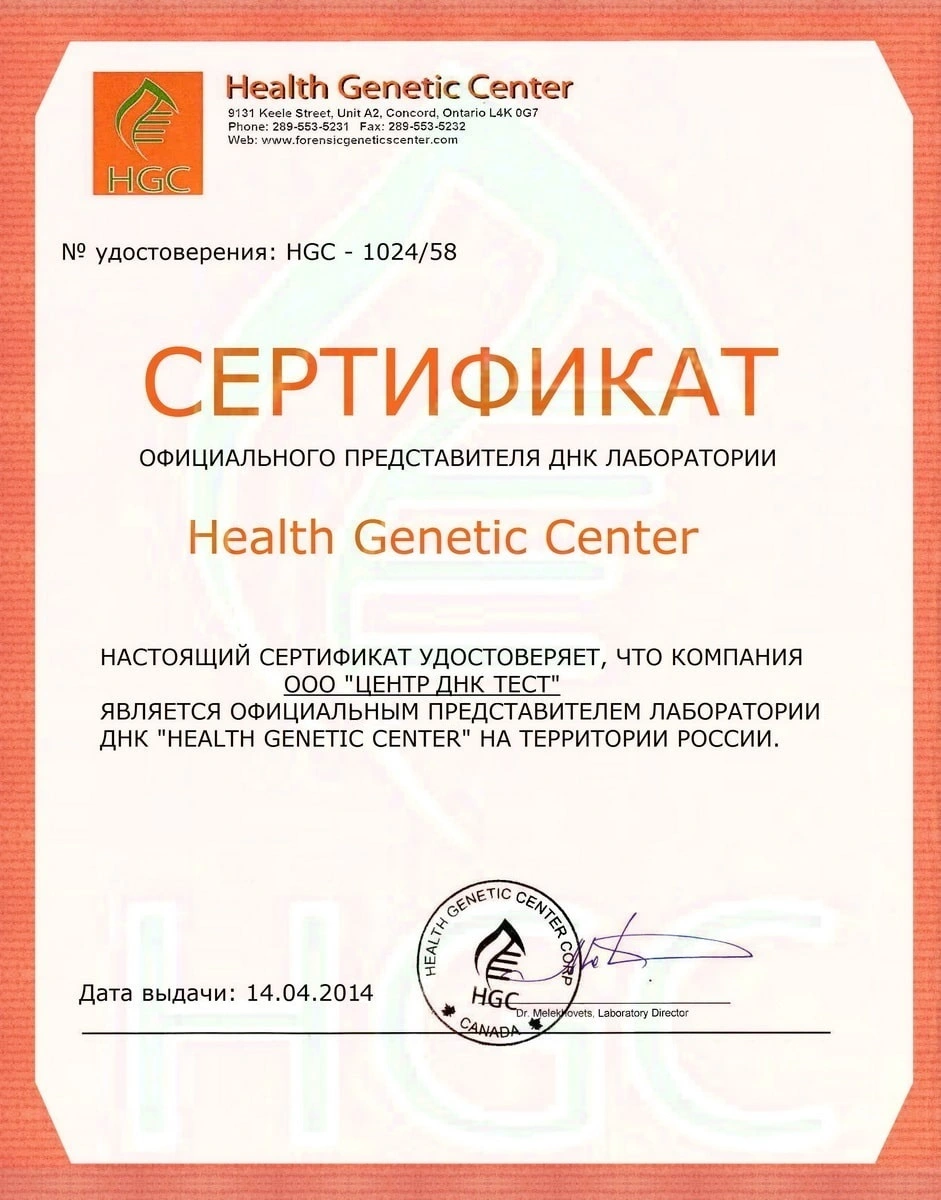
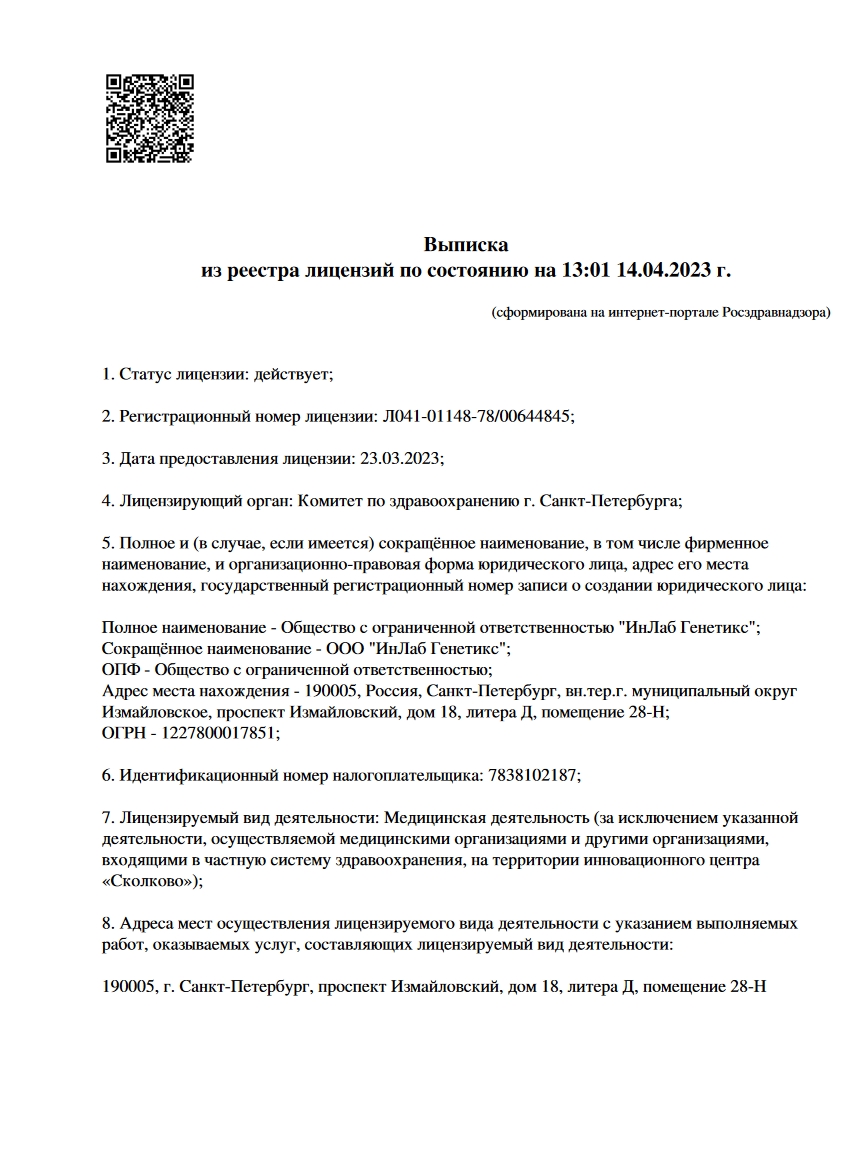
DNA Laboratory licenses and certificates
How to take a DNA test for male infertility?
For genetic analysis, samples of buccal epithelium (mouth swab) or venous blood in the amount of 5-10 ml are used.
Venous blood
For blood collection, a vacuum tube with a purple cap is required. The tube must contain Ethylenediaminetetraacetic acid (EDTA) of type K1, K2, or K3. The volume of blood should be from 2 ml to 6 ml. Using two tubes is allowed.
Collection is performed with the patient in a sitting position. Blood flow should go directly into the tube. After the procedure, shake the tube 5-6 times to mix the blood with EDTA evenly.
Buccal epithelium
To take a buccal epithelium sample, you can visit specialists at a biomaterial collection point or perform the sampling yourself at home. For this, you will need:
- cotton swabs — at least 2 pcs, preferably 4;
- a clean paper envelope — 1 pc;
- a pair of sterile disposable gloves — 1 pair.
You can also order a free kit by phone at our DNA center, which already contains everything necessary.
See the detailed instructions with video: How to take a sample.
How long does it take?

The turnaround time for the analysis is 5 business days from the moment the samples arrive at the laboratory.
The day of sample delivery is not counted, as all samples first go through a registration process before being forwarded to the genetic specialists.
How to Receive the Report
You can receive your DNA test results in any convenient way:
- Electronically via email;
- In person at the biological sample collection point;
- By delivery through Russian Post;
- By courier delivery to your door;
- By phone (if you have a unique order number, and the phone number is authorized to receive verbal results).
The method of result delivery is selected when placing the order for the analysis.

Where to take a DNA test for male infertility
Take a DNA test for male infertility
- You can use the form «Pre-appointment» to schedule an appointment or come to our genetic center at any time convenient for you.
See step-by-step instructions see here. - Do it yourself at home:
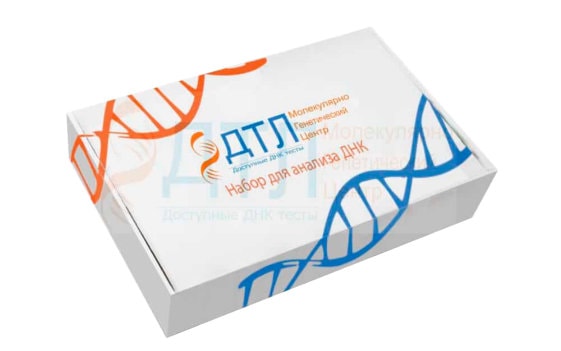
- Order by courier our branded kit, specially designed for self-collection of DNA samples.
- Using ordinary cotton swabs (ear swabs) from a pharmacy. Our instructions.
- Order a specialist visit to your home for free.
Why the DNA Center «DTL» is the Best in Moscow


How to pay for a DNA test for male infertility
For your convenience, there are several cash and non-cash payment options for a DNA test:
- In our DNA centers, you can pay in cash or with a bank card.
- Online payment is available on our DNA center website.
- At the offices of Sberbank or any other Bank by receipt (download).
- Through a bank account (for legal entities).
When filling out an application for DNA analysis, you can choose the method of receiving the genetic test results:
- In person at the DNA center.
- To the e-mail specified in the application for analysis.
- By courier service throughout Russia.
- If you have taken a legal DNA test, we can send the forensic genetic report to the address of the court.
- If you need another delivery method, you can specify it in the application.
Each order is assigned a unique individual number. The laboratory guarantees 100% safety and confidentiality of all data received from you.

What should I do if the test is positive?
A positive test result indicates the presence of a pathological gene variant that increases the risk of developing a malignant tumor. This should not be viewed as a sentence. A DNA test is conducted to provide early awareness of potential cancer development.
However, there is a possibility that cancer has already begun to form. In such cases, DNA testing serves as one of the diagnostic tools at the earliest stages of the disease.
If the result is positive, it is important to:
- Consult an oncologist with your DNA test results;
- Undergo additional diagnostic procedures: X-ray imaging, cytological examinations, laparoscopy and thoracoscopy, biopsy of tumor tissue.
These investigations will help the oncologist accurately determine the stage of cancer and whether metastases are present. By combining this information with family history and DNA analysis results, appropriate treatment can be prescribed.
A comprehensive approach is typically used, combining surgery with chemotherapy or radiation therapy. The treatment plan and type of therapy are determined solely by the attending physician.
Reviews of DNA Tests and Laboratories in Moscow
























The «DTL» DNA Center conducts DNA testing throughout the entire Russian Federation. The laboratory uses equipment from Applied Biosystems, a global leader in biotechnology. Modern scientific and technological advancements enable us to perform unique DNA tests that are offered by only a few laboratories worldwide. All tests are carried out exclusively by certified specialists, including world-class experts with over 15 years of experience in DNA research.
The «DTL» DNA Center has offices in many cities across Russia, making it possible to submit samples in virtually any city, including smaller towns across the country.